Technology 06.10.2026· Article by Maria Jones

How Smart Factories Are Changing Industrial Manufacturing

How Smart Factories Are Changing Industrial Manufacturing

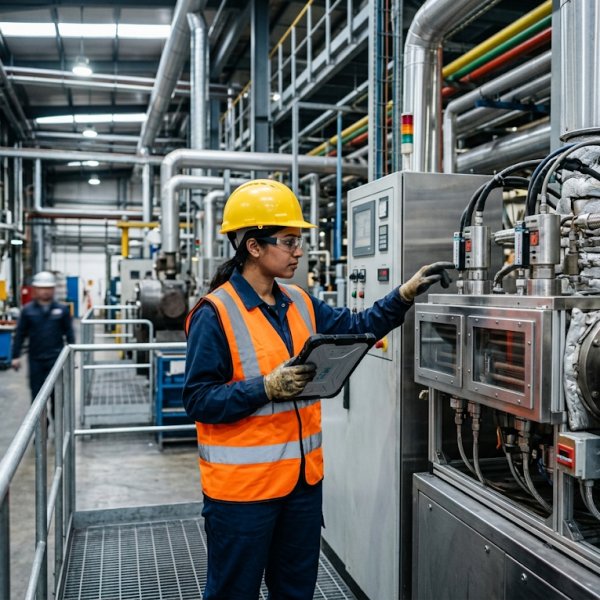
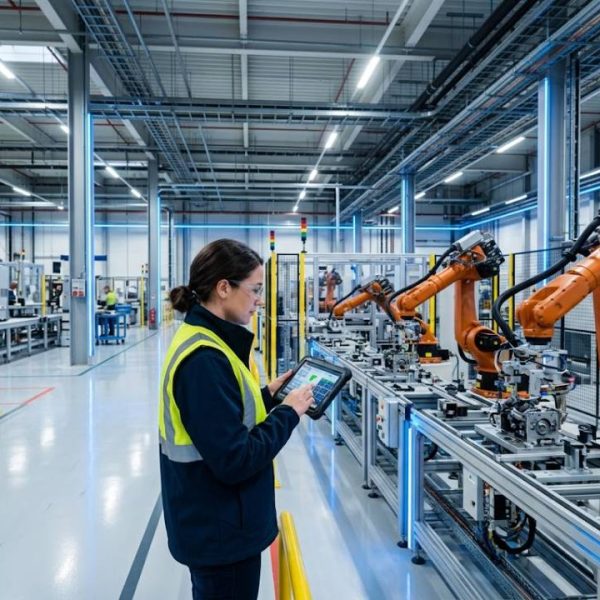
Walk into a modern factory and you may hear less noise than you expect. Robotic arms move with precision, autonomous vehicles carry parts between stations, and screens display live data from hundreds of sensors. This is the smart factory, and it is changing how industrial companies design, produce and deliver products.

Smart manufacturing is not just about robots. It is about connecting machines, people and data so that decisions are faster, quality is higher and waste is lower.

What Makes a Factory Smart

A smart factory combines several technologies that work together:

  • Industrial Internet of Things sensors that monitor machines in real time.
  • Robotics and collaborative robots that work safely beside people.
  • Digital twins, virtual models of machines or entire production lines.
  • AI and analytics that predict failures and optimise processes.
  • Cloud and edge computing that process data where it is needed.

Predictive Maintenance

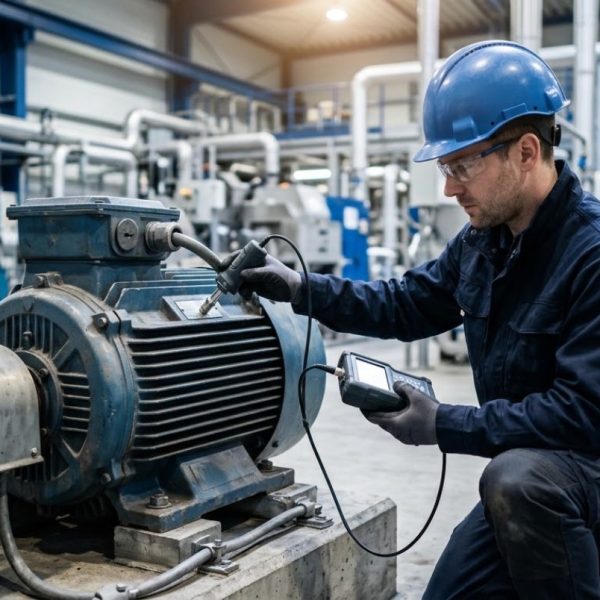
Unplanned downtime is one of the most expensive problems in manufacturing. Sensors that track vibration, temperature and power consumption can warn engineers before a machine fails. Maintenance is scheduled when needed, not too early and not too late. Many manufacturers report significant reductions in downtime after introducing predictive maintenance.

Digital Twins

A digital twin is a virtual copy of a physical asset. Engineers can test new settings, simulate production changes or train operators without stopping the real line. When combined with live sensor data, the twin mirrors what happens on the shop floor and helps teams spot problems early.

Quality Control With Computer Vision

Cameras and AI models now inspect products faster and more consistently than the human eye. They detect scratches, misalignments and missing parts in milliseconds. Human inspectors are not replaced, they focus on complex cases and on improving processes.

People Remain at the Centre

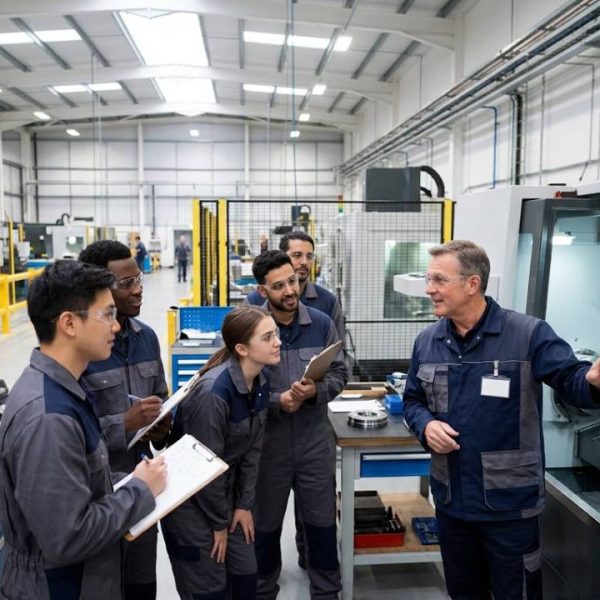
Smart factories still depend on skilled people. Operators need to understand dashboards, technicians must maintain robots and software, and managers must make sense of data. Training is one of the biggest investments in any digital transformation. The NIST Manufacturing Extension Partnership in the United States, for example, helps small and medium manufacturers adopt new technologies and train their workforce.

Global Teams, Many Languages

Industrial manufacturers rarely operate in one country. A company might design machines in Germany, build components in Poland and Mexico, and sell to customers in Asia and North America. Work instructions, safety procedures, software interfaces and training material must be available in every language used on the shop floor.

This creates a huge volume of technical content that changes constantly. Leading manufacturers manage it with a translation workflow management system that connects engineering documentation, translators and reviewers. When a procedure is updated, every language version can be updated quickly and consistently.

A reliable tms tool with translation memory also cuts costs, because repeated safety warnings and standard steps are reused instead of translated again for every new manual.

Beyond software, many manufacturers rely on professional translation services to handle the most sensitive documents in the production chain. Safety manuals, compliance certificates and supplier contracts demand human expertise that no automated tool can fully replace. A professional translation team with industrial experience understands both the terminology and the regulatory context behind every page. For global operations, this combination of human accuracy and technical knowledge keeps production lines running safely across borders.

Germany and Industry 4.0

Germany coined the term Industry 4.0 and remains a leader in industrial automation. Many machines, control systems and engineering standards come from German manufacturers. International companies buying German equipment often need professional german translation services for technical specifications, contracts and certification documents, ensuring that nothing is lost between engineering teams.

Cybersecurity Becomes Critical

Connecting machines to networks brings new risks. A cyberattack can stop production or damage equipment. Smart factories need segmented networks, regular updates, strong access controls and staff training. Security must be designed in from the start, not added later.

Sustainability Gains

Smart manufacturing also supports sustainability goals. Real-time energy monitoring shows where power is wasted. Better quality control reduces scrap. Optimised logistics cut transport emissions. For many companies, efficiency and environmental targets now go hand in hand.

Starting Small

Not every manufacturer needs to rebuild its factory. Many start with a pilot project: sensors on one critical machine, a dashboard for one production line, or a computer vision system for one inspection step. Once the value is proven, the approach can scale.

Measuring Success

Clear metrics keep projects on track. Common indicators include overall equipment effectiveness, unplanned downtime, scrap rates, energy use per unit and time from order to delivery. Measuring these before and after each change shows which investments truly pay off and helps build the business case for the next step.

Flexible Production for Smaller Batches

Customers increasingly expect personalised products and shorter delivery times. Traditional production lines were built for large runs of identical items. Smart factories use reconfigurable equipment, automated changeovers and software-driven scheduling to produce smaller batches profitably. A line that once made one product for weeks can now switch between variants several times a day, guided by real-time order data. This flexibility helps manufacturers respond quickly to market changes and reduce stock levels in warehouses.

The Road Ahead

Smart factories are no longer a vision for the distant future. They are being built today, step by step. Manufacturers that combine technology, skilled people and clear communication across languages will be the ones that stay competitive in the decade ahead.
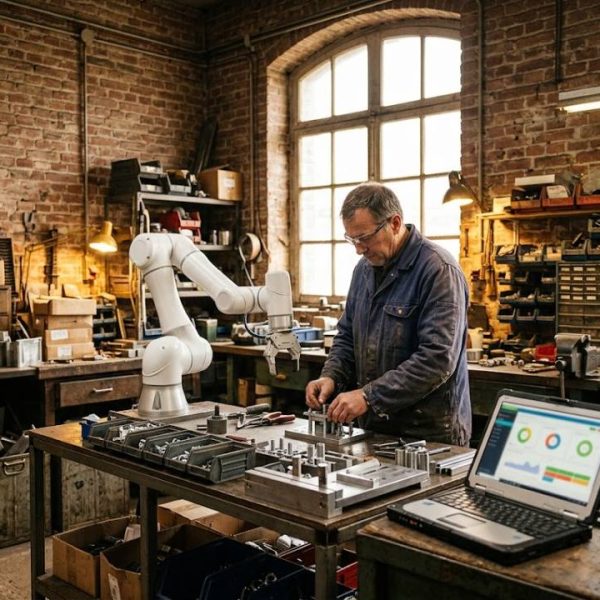
Walk into a modern factory and you may hear less noise than you expect. Robotic arms move with precision, autonomous vehicles carry parts between stations, and screens display live data from hundreds of sensors. This is the smart factory, and it is changing how industrial companies design, produce and deliver products.

Walk into a modern factory and you may hear less noise than you expect. Robotic arms move with precision, autonomous vehicles carry parts between stations, and screens display live data from hundreds of sensors. This is the smart factory, and it is changing how industrial companies design, produce and deliver products.

Smart manufacturing is not just about robots. It is about connecting machines, people and data so that decisions are faster, quality is higher and waste is lower.

Smart manufacturing is not just about robots. It is about connecting machines, people and data so that decisions are faster, quality is higher and waste is lower.

What Makes a Factory Smart

A smart factory combines several technologies that work together:

  • Industrial Internet of Things sensors that monitor machines in real time.
  • Robotics and collaborative robots that work safely beside people.
  • Digital twins, virtual models of machines or entire production lines.
  • AI and analytics that predict failures and optimise processes.
  • Cloud and edge computing that process data where it is needed.

Predictive Maintenance

Unplanned downtime is one of the most expensive problems in manufacturing. Sensors that track vibration, temperature and power consumption can warn engineers before a machine fails. Maintenance is scheduled when needed, not too early and not too late. Many manufacturers report significant reductions in downtime after introducing predictive maintenance.

Unplanned downtime is one of the most expensive problems in manufacturing. Sensors that track vibration, temperature and power consumption can warn engineers before a machine fails. Maintenance is scheduled when needed, not too early and not too late. Many manufacturers report significant reductions in downtime after introducing predictive maintenance.

Digital Twins

A digital twin is a virtual copy of a physical asset. Engineers can test new settings, simulate production changes or train operators without stopping the real line. When combined with live sensor data, the twin mirrors what happens on the shop floor and helps teams spot problems early.

A digital twin is a virtual copy of a physical asset. Engineers can test new settings, simulate production changes or train operators without stopping the real line. When combined with live sensor data, the twin mirrors what happens on the shop floor and helps teams spot problems early.

Quality Control With Computer Vision

Cameras and AI models now inspect products faster and more consistently than the human eye. They detect scratches, misalignments and missing parts in milliseconds. Human inspectors are not replaced, they focus on complex cases and on improving processes.

Cameras and AI models now inspect products faster and more consistently than the human eye. They detect scratches, misalignments and missing parts in milliseconds. Human inspectors are not replaced, they focus on complex cases and on improving processes.

People Remain at the Centre

Smart factories still depend on skilled people. Operators need to understand dashboards, technicians must maintain robots and software, and managers must make sense of data. Training is one of the biggest investments in any digital transformation. The NIST Manufacturing Extension Partnership in the United States, for example, helps small and medium manufacturers adopt new technologies and train their workforce.

Smart factories still depend on skilled people. Operators need to understand dashboards, technicians must maintain robots and software, and managers must make sense of data. Training is one of the biggest investments in any digital transformation. The NIST Manufacturing Extension Partnership in the United States, for example, helps small and medium manufacturers adopt new technologies and train their workforce.

Global Teams, Many Languages

Industrial manufacturers rarely operate in one country. A company might design machines in Germany, build components in Poland and Mexico, and sell to customers in Asia and North America. Work instructions, safety procedures, software interfaces and training material must be available in every language used on the shop floor.

Industrial manufacturers rarely operate in one country. A company might design machines in Germany, build components in Poland and Mexico, and sell to customers in Asia and North America. Work instructions, safety procedures, software interfaces and training material must be available in every language used on the shop floor.

This creates a huge volume of technical content that changes constantly. Leading manufacturers manage it with a translation workflow management system that connects engineering documentation, translators and reviewers. When a procedure is updated, every language version can be updated quickly and consistently.

This creates a huge volume of technical content that changes constantly. Leading manufacturers manage it with a translation workflow management system that connects engineering documentation, translators and reviewers. When a procedure is updated, every language version can be updated quickly and consistently.

A reliable tms tool with translation memory also cuts costs, because repeated safety warnings and standard steps are reused instead of translated again for every new manual.

A reliable tms tool with translation memory also cuts costs, because repeated safety warnings and standard steps are reused instead of translated again for every new manual.

Germany and Industry 4.0

Germany coined the term Industry 4.0 and remains a leader in industrial automation. Many machines, control systems and engineering standards come from German manufacturers. International companies buying German equipment often need professional german translation services for technical specifications, contracts and certification documents, ensuring that nothing is lost between engineering teams.

Germany coined the term Industry 4.0 and remains a leader in industrial automation. Many machines, control systems and engineering standards come from German manufacturers. International companies buying German equipment often need professional german translation services for technical specifications, contracts and certification documents, ensuring that nothing is lost between engineering teams.

Cybersecurity Becomes Critical

Connecting machines to networks brings new risks. A cyberattack can stop production or damage equipment. Smart factories need segmented networks, regular updates, strong access controls and staff training. Security must be designed in from the start, not added later.

Connecting machines to networks brings new risks. A cyberattack can stop production or damage equipment. Smart factories need segmented networks, regular updates, strong access controls and staff training. Security must be designed in from the start, not added later.

Sustainability Gains

Smart manufacturing also supports sustainability goals. Real-time energy monitoring shows where power is wasted. Better quality control reduces scrap. Optimised logistics cut transport emissions. For many companies, efficiency and environmental targets now go hand in hand.

Smart manufacturing also supports sustainability goals. Real-time energy monitoring shows where power is wasted. Better quality control reduces scrap. Optimised logistics cut transport emissions. For many companies, efficiency and environmental targets now go hand in hand.

Starting Small

Not every manufacturer needs to rebuild its factory. Many start with a pilot project: sensors on one critical machine, a dashboard for one production line, or a computer vision system for one inspection step. Once the value is proven, the approach can scale.

Not every manufacturer needs to rebuild its factory. Many start with a pilot project: sensors on one critical machine, a dashboard for one production line, or a computer vision system for one inspection step. Once the value is proven, the approach can scale.

Measuring Success

Clear metrics keep projects on track. Common indicators include overall equipment effectiveness, unplanned downtime, scrap rates, energy use per unit and time from order to delivery. Measuring these before and after each change shows which investments truly pay off and helps build the business case for the next step.

Clear metrics keep projects on track. Common indicators include overall equipment effectiveness, unplanned downtime, scrap rates, energy use per unit and time from order to delivery. Measuring these before and after each change shows which investments truly pay off and helps build the business case for the next step.

Flexible Production for Smaller Batches

Customers increasingly expect personalised products and shorter delivery times. Traditional production lines were built for large runs of identical items. Smart factories use reconfigurable equipment, automated changeovers and software-driven scheduling to produce smaller batches profitably. A line that once made one product for weeks can now switch between variants several times a day, guided by real-time order data. This flexibility helps manufacturers respond quickly to market changes and reduce stock levels in warehouses.

Customers increasingly expect personalised products and shorter delivery times. Traditional production lines were built for large runs of identical items. Smart factories use reconfigurable equipment, automated changeovers and software-driven scheduling to produce smaller batches profitably. A line that once made one product for weeks can now switch between variants several times a day, guided by real-time order data. This flexibility helps manufacturers respond quickly to market changes and reduce stock levels in warehouses.

The Road Ahead

Smart factories are no longer a vision for the distant future. They are being built today, step by step. Manufacturers that combine technology, skilled people and clear communication across languages will be the ones that stay competitive in the decade ahead.
Smart factories are no longer a vision for the distant future. They are being built today, step by step. Manufacturers that combine technology, skilled people and clear communication across languages will be the ones that stay competitive in the decade ahead.